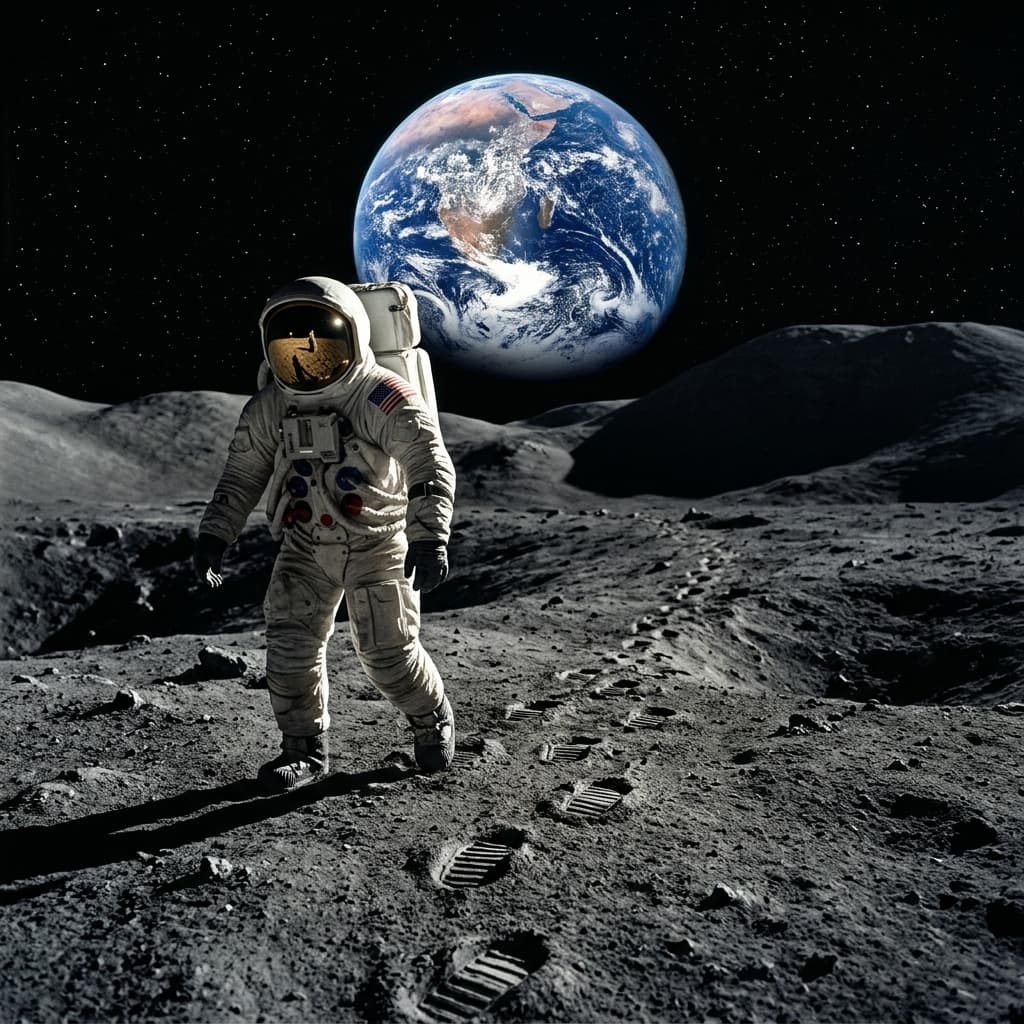
Orbit-SpaceX issues $2.5 billion in debt instruments backed by projected Helium-3 extraction revenues from the permanently shadowed craters of the lunar south pole.
Orbit-SpaceX has successfully issued the first-ever Helium-3 mining bonds, raising $2.5 billion in capital to fund extraction operations at the lunar south pole. The bonds, structured as 10-year instruments with a 7.5% annual coupon, are backed by projected revenue from Helium-3 extraction at sites within the permanently shadowed craters near Shackleton Crater.
Helium-3, an isotope virtually nonexistent on Earth but abundant in lunar regolith, is considered the ideal fuel for future nuclear fusion reactors. While commercial fusion power remains in development, advances by companies including Commonwealth Fusion Systems and TAE Technologies have dramatically improved the technology's near-term prospects. Analysts at Goldman Sachs estimate that Helium-3 could command prices exceeding $15,000 per gram once fusion reactors reach commercial scale — making lunar Helium-3 deposits potentially the most valuable natural resource in the solar system.
"We're issuing these bonds now because the window of opportunity is narrowing," explained CFO Sarah Blackwood. "Multiple nations and companies are targeting the same deposits. Orbit-SpaceX intends to establish extraction infrastructure first, securing our position and our investors' returns."
The bond offering was managed by a syndicate led by Goldman Sachs and JPMorgan Chase, with participation from Barclays, Deutsche Bank, and Nomura. Demand far exceeded supply, with the book receiving over $8 billion in orders — more than three times the offering size. This strong demand allowed Orbit-SpaceX to price the bonds at a coupon rate significantly lower than initial guidance, reflecting investor confidence in the company's ability to execute.
The extraction technology is already in advanced development. Orbit-SpaceX has been testing robotic mining systems at its Starbase facility using lunar regolith simulant — a synthetic material that closely replicates the composition and physical properties of actual lunar soil. These systems use solar-powered heating elements to release Helium-3 trapped within the regolith, followed by cryogenic capture and compression for transport to Earth.
The first unmanned mining mission is scheduled for 2029, with initial extraction rates projected at 100 kilograms per year. Orbit-SpaceX's long-term plan envisions scaling to 10,000 kilograms annually by 2035, supplying enough Helium-3 to fuel dozens of commercial fusion reactors.
Transport of extracted Helium-3 from the Moon to Earth will be accomplished using modified Starship cargo vehicles in a regular shuttle service. The economics of this transport chain are favorable due to Helium-3's extraordinary energy density — a single Starship load of approximately 20 tonnes would contain enough fuel to power the entire eastern United States for a year.
Legal frameworks governing lunar mining have been clarified by the Artemis Accords, a set of bilateral agreements between the United States and over 30 partner nations. These accords establish the principle that resources extracted from celestial bodies can be owned and traded, providing the legal foundation for instruments like the Helium-3 mining bonds.
The successful bond offering is expected to accelerate development across the lunar mining sector. Several competing ventures have announced plans for their own extraction operations, and the establishment of a liquid secondary market for Helium-3 bonds creates a pricing benchmark that will facilitate future financing.
For Orbit-SpaceX, the bonds represent more than capital — they represent validation. "Every bond purchased is a vote of confidence in humanity's future on the Moon," Blackwood noted. "Our investors aren't just funding a mining operation. They're investing in the energy source that will power civilization for centuries."