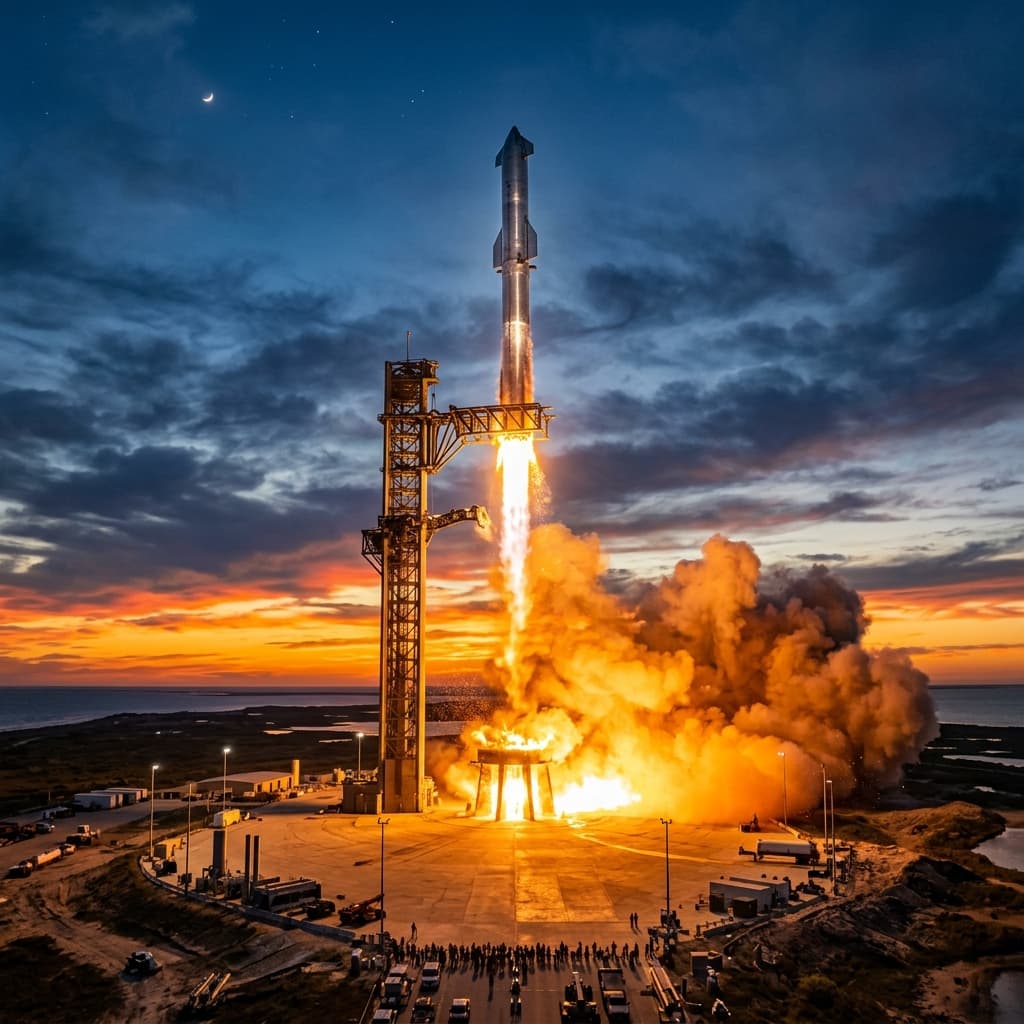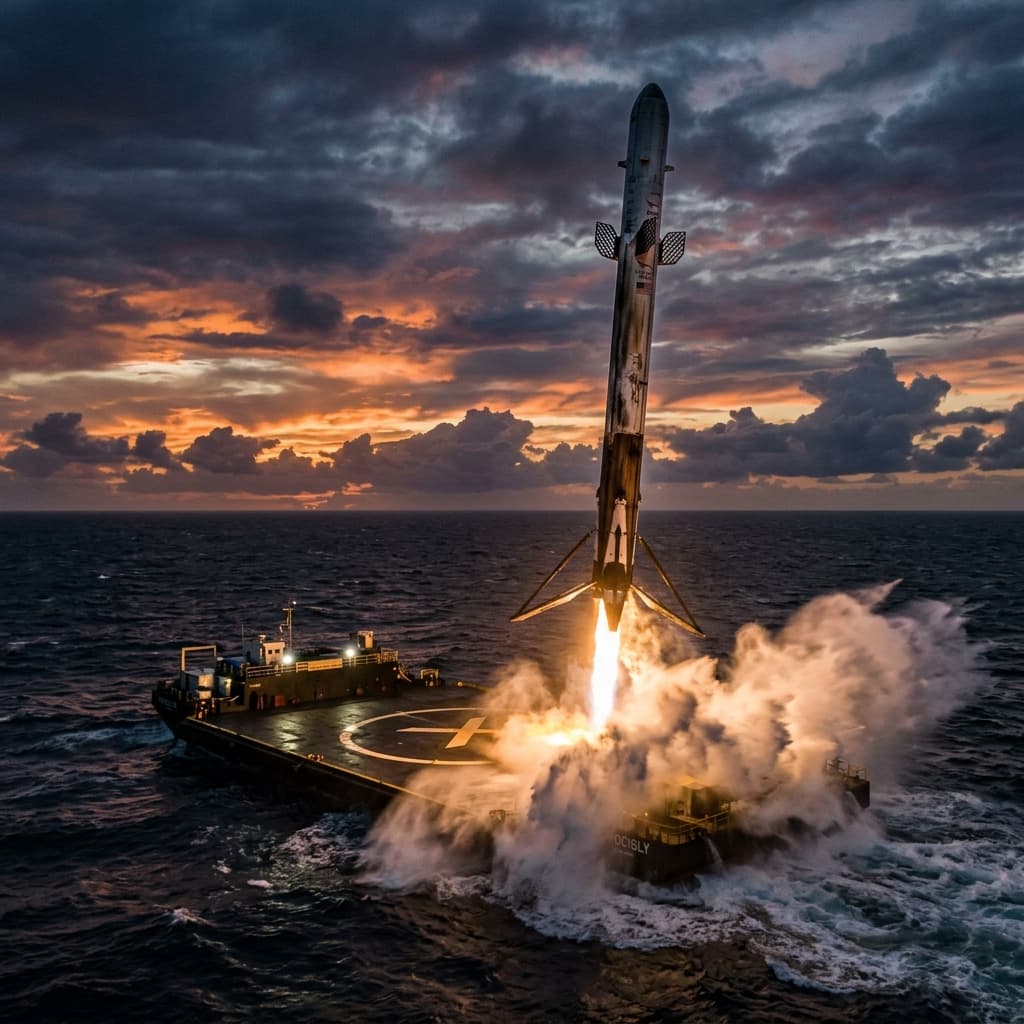
The latest Starship iteration successfully transferred 150 tonnes of propellant between two vehicles in orbit, a critical capability for deep-space missions.
SpaceX's Starship Block 5 vehicle has successfully demonstrated in-orbit propellant transfer for the first time, marking a critical milestone on the path to deep-space human exploration. The test, conducted on February 20, 2026, involved two Starship vehicles — a tanker variant designated "Ship 35" and a mission-configured vehicle designated "Ship 36" — performing an automated rendezvous and docking at an altitude of 250 kilometers.
Over the course of approximately 90 minutes, Ship 35 transferred 150 tonnes of liquid methane and liquid oxygen propellant to Ship 36's main tanks. Telemetry data confirmed that the transfer was completed with zero measurable propellant loss and within 3% of predicted flow rates — a performance that exceeded Orbit-SpaceX's engineering targets.
"In-orbit refueling is the key that unlocks everything," declared Elon Musk in a post on X following the successful demonstration. "Without it, you can't get to Mars with enough fuel to land and come back. Today's test proves that the technology works, and it works at scale."
The Block 5 designation represents the fifth major iteration of the Starship design, incorporating lessons learned from over 30 previous test flights. Key improvements in Block 5 include a redesigned propellant coupling mechanism that can be engaged entirely through robotic systems without EVA support, enhanced thermal management systems that prevent propellant boil-off during extended docking operations, and upgraded Raptor 3 engines with improved specific impulse.
The refueling demonstration has immediate implications for Orbit-SpaceX's mission timeline. The company's planned Artemis Finance I lunar mission requires approximately 1,200 tonnes of propellant in the Starship's tanks when it departs low Earth orbit — far more than a single launch can deliver. The current mission profile calls for four tanker launches to fully fuel the mission vehicle, a sequence that today's test has validated as technically feasible.
NASA, which has contracted SpaceX to develop a Starship variant as the Human Landing System for its Artemis program, issued a statement congratulating the team and noting that the successful refueling demonstration satisfies a key milestone in the HLS contract. The completion of this milestone triggers a payment of approximately $1.15 billion to SpaceX, funding further development of the lunar landing variant.
The Department of Defense has also expressed interest in in-orbit refueling capabilities. Space Force officials have been briefed on the test results and are reportedly exploring applications for sustained orbital operations, satellite servicing, and rapid-response space logistics.
For the commercial space industry more broadly, the demonstration opens doors to mission profiles that were previously impossible. With reliable in-orbit refueling, spacecraft can carry heavier payloads, reach more distant destinations, and extend mission durations indefinitely — fundamentally changing the economics of space exploration.
Orbit-SpaceX plans to conduct monthly refueling demonstrations throughout 2026, gradually increasing the complexity of operations to include propellant transfer in higher orbits, multi-vehicle refueling chains, and long-duration propellant storage tests. The company's goal is to have the refueling infrastructure fully operational and certified for human-rated missions by Q3 2027.
The successful Block 5 test marks another step in Orbit-SpaceX's relentless pursuit of making interplanetary travel routine. As Dr. Mehta summarized: "Today we transferred fuel between two ships in orbit. Tomorrow we use that fuel to take people to the Moon. The day after that, Mars. Each step leads inevitably to the next."