 Back to Updates
ORBITAL BLOCKCHAIN NODE ACHIEVES 99.99% UPTIME THROUGH SOLAR STORM
The first dedicated blockchain validation node in LEO maintained continuous operation during a severe coronal mass ejection, proving the resilience of orbital infrastructure.
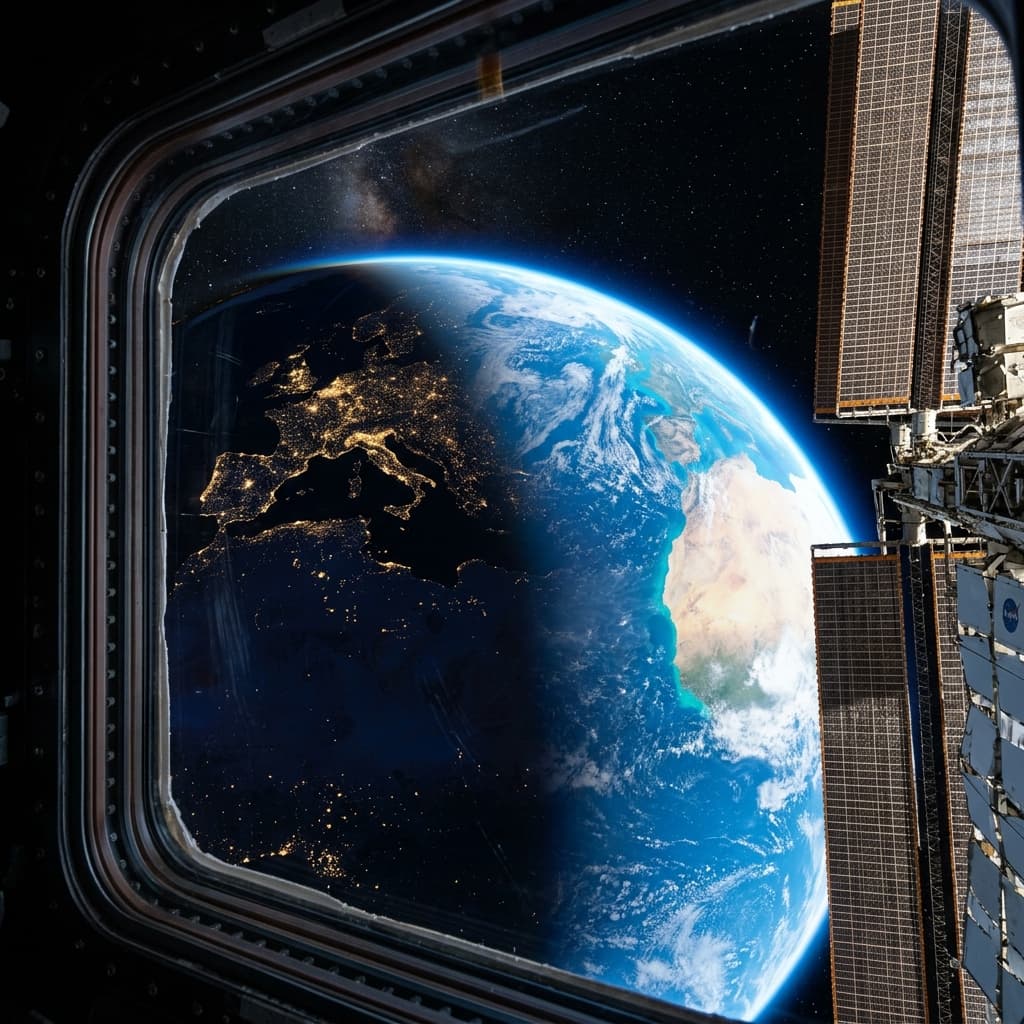
Orbit-SpaceX's orbital blockchain validation node — the first of its kind to operate in low Earth orbit — has passed its most severe stress test to date. During a Category G4 geomagnetic storm that struck Earth's magnetosphere on March 28, 2026, the orbital node maintained a remarkable 99.99% uptime, processing over 2.3 million transactions without a single confirmed failure.
The achievement represents a watershed moment for the concept of space-based computational infrastructure. Ground-based data centers across North America and Northern Europe experienced significant disruptions during the same storm, with several major cloud providers reporting degraded service for periods of up to 14 hours. Meanwhile, the orbital node — hardened against radiation and equipped with redundant shielding — continued to validate blocks with sub-second confirmation times.
"This is exactly the scenario we designed for," said Dr. Priya Mehta, Orbit-SpaceX's Director of Orbital Infrastructure. "The entire premise of moving critical financial infrastructure to orbit is that space, paradoxically, offers more consistent operating conditions than the surface of Earth. Solar storms affect ground-based electronics through induced currents in power grids and communication cables. In orbit, with proper shielding, you're actually more isolated from those effects."
The node itself is housed aboard the OrbNode-1 platform, a custom-built satellite launched in October 2025 on a dedicated Falcon 9 mission. The platform features triple-redundant processing units, each enclosed in radiation-hardened casings that exceed military specification standards. Power is supplied by a combination of high-efficiency solar panels and next-generation solid-state batteries that can sustain full operations during Earth-shadow passes.
The blockchain network validated during the storm was Orbit-SpaceX's proprietary Orbital Ledger, a purpose-built distributed ledger designed specifically for space-based operations. Unlike traditional blockchain networks that rely on proof-of-work or proof-of-stake consensus mechanisms, the Orbital Ledger uses a novel "proof-of-position" system that leverages the node's verified orbital coordinates as a cryptographic trust anchor.
Financial institutions have taken immediate notice. JPMorgan Chase, which had been conducting a pilot program using the orbital node for interbank settlement testing, issued a statement calling the storm-resilience demonstration "a compelling validation of the orbital infrastructure thesis." The bank confirmed it would expand its pilot program to include real-money settlements within 90 days.
The insurance implications are equally significant. Lloyd's of London has begun drafting a new category of "orbital resilience" coverage that recognizes the superior uptime characteristics of space-based infrastructure. Premiums for companies using orbital validation are expected to be substantially lower than those for purely ground-based operations, creating a direct financial incentive for migration to space-based systems.
Orbit-SpaceX plans to launch two additional OrbNode platforms before the end of 2026, creating a distributed orbital network capable of maintaining consensus even if individual nodes experience temporary outages. The company's long-term roadmap envisions a constellation of 24 validation nodes in various orbital planes, providing true global coverage and eliminating any single point of failure.
The success of the orbital data center during the solar storm has accelerated timelines across the industry. Multiple competitors have announced plans for their own orbital computing platforms, but Orbit-SpaceX's head start — both in hardware and in institutional partnerships — gives it a commanding lead in what analysts predict will be a $500 billion market by 2035.