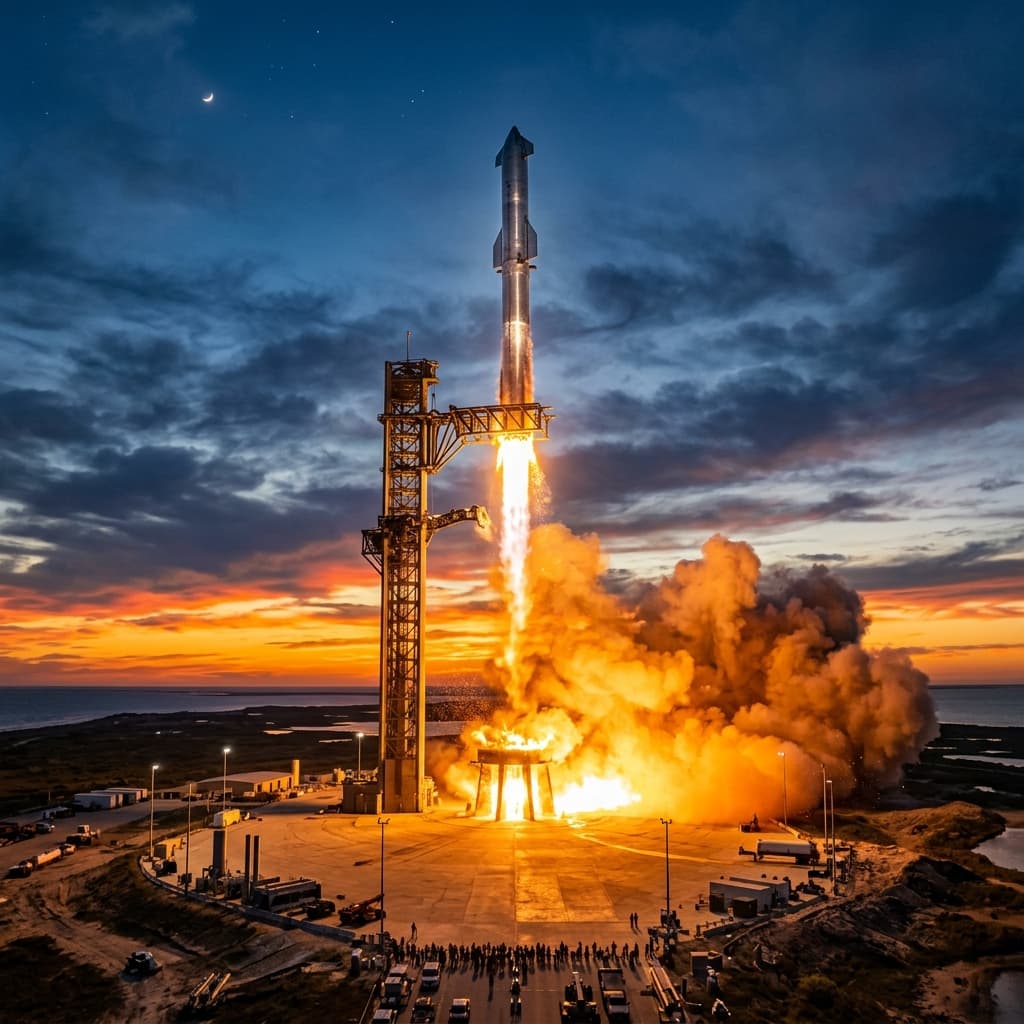
Elon Musk establishes Orbit-SpaceX as a dedicated division focused on the intersection of space tourism and sovereign financial markets.
On November 1, 2023, Elon Musk officially established Orbit-SpaceX as a wholly-owned subsidiary of Space Exploration Technologies Corp (SpaceX), creating a dedicated company focused on the commercial applications of space infrastructure in tourism, finance, and habitation. The founding, announced via a joint statement from SpaceX and the newly formed Orbit-SpaceX, marks a strategic recognition that the business of space is diversifying beyond launch services into entirely new economic domains.
"SpaceX builds the rockets. Orbit-SpaceX builds the economy," was Musk's characteristically concise summary during the announcement, delivered via video call from Starbase while a Starship prototype stood gleaming in the background. "We've proven we can get to orbit reliably and affordably. Now we need a dedicated team focused on what humanity does once it gets there."
The subsidiary was established with an initial capitalization of $10 billion, drawn from SpaceX's substantial cash reserves and supplemented by strategic investments from Sequoia Capital, Founders Fund, and several sovereign wealth funds. The founding team includes 200 employees drawn from SpaceX's commercial division, supplemented by new hires from finance, hospitality, aerospace engineering, and regulatory affairs.
Helena Navarro, previously SpaceX's Vice President of Commercial Programs, was named CEO. Navarro's background includes a decade at Goldman Sachs, a PhD in aerospace engineering from MIT, and, crucially, experience as a crew member on the Inspiration4 mission — making her one of the few executives in any industry who has personally experienced the product she is building.
The company's founding charter outlines four operational divisions. The Tourism Division will develop and market civilian space travel experiences, from short-duration orbital flights to multi-week lunar missions. The Financial Infrastructure Division will build space-based trading platforms, validation networks, and custody solutions for digital assets. The Habitation Division will design and construct living spaces for long-duration space residents. And the Resource Development Division will pursue mining and manufacturing operations on the Moon and Mars.
The founding was accompanied by the announcement of Orbit-SpaceX's first three contracts. A $2 billion agreement with a consortium of luxury hospitality companies to develop the Orbit-Station tourism module. A $500 million development contract from NASA for financial operations integration aboard the Lunar Gateway. And a $1.8 billion commitment from institutional investors for the development of the Orbital Exchange — the first financial trading platform to operate in space.
Industry reaction was enthusiastic but cautious. Analysts noted that Orbit-SpaceX faces significant technical and regulatory challenges, including the need to develop life support systems rated for civilian passengers, navigate complex international space law frameworks, and build financial products for markets that do not yet exist. Nevertheless, the backing of SpaceX — the world's most capable launch provider — and the caliber of the founding team generated widespread confidence.
The founding of Orbit-SpaceX also signals a broader maturation of the space industry. For decades, commercial space has been defined primarily by launch services — getting things from Earth to orbit. The creation of a dedicated subsidiary for space-based commerce acknowledges that the hard part is increasingly not the launch itself but the building of services, experiences, and economies in the space environment.
As Navarro stated during the founding press conference: "We are standing at the beginning of the greatest economic expansion in human history. The space economy will eventually dwarf the Earth economy — not because Earth's economy will shrink, but because the resources and opportunities of space are, quite literally, infinite. Orbit-SpaceX exists to make that expansion happen."
The company's founding represents the formal beginning of a journey that its leadership believes will span centuries — a project of civilizational significance that happens to also be a very compelling business opportunity.